
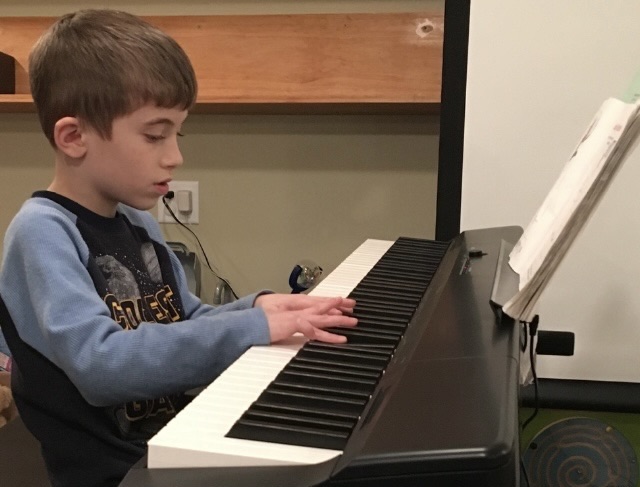
9 Strategies to Handle Frustration
If your child is experiencing frustration or overwhelm in their practice time, here are a few
things that might help.
Communicate with the teacher. Teachers want their students to have positive experiences
with their instrument, even when it’s challenging. Letting the teacher know about the struggle
will help them to make any adjustments that may need to be made, and to better know how to
communicate with the child.
Take a break. You know your child best, but if you see fit, allow them to step away from the
piano for an hour or so until their mindset lifts. Have them spend time outside or do physical
activity for a few minutes to engage their body and give their mind a break. Then come back to
the practice session after the break. Soldiering through has its place, but so does taking time
to loosen up.
Be positive. Have a lighthearted approach. If your child is overwhelmed by getting notes
wrong, focus on the notes that were played correctly. (“I made six mistakes!”… “But you
played 35 notes correctly. That’s great!”) Find aspects to praise- the child’s posture, hand
shape, dynamics, smoothness, musicality, etc.
Play a duet. If you play yourself, help them through a difficult song by playing one hand while
they play the other. Then switch. It can be fun and it can bring some laughter to a tense
practice session.
Break down the difficult sections. Many students have a tendency to get to a difficult part of
the piece, make a mistake, and then immediately begin the song again to try to “do it right.”
This doesn’t help them actually correct and polish the difficult part. Consider drawing a
“practice box” around the difficult measure or phrase, and have them play it through one hand
at a time or very slowly, and to repeat it multiple times (set a number of three or five times,
according to their attention span and attitude). If that is very frustrating, consider allowing that
to be the extent of the practice session. It will pay off when they come back to it tomorrow.
Have a review day. Reviewing old songs, or being quizzed on terminology and symbols is still
good practice. If your child needs it, have their practice session for one day consist of this. Sit
with them and ask them to tell you what kind of note that is, what key or chord or rhythm this
is, the name of that clef. It gives them a reminder that they’ve learned a lot, and it helps review
old concepts.
Look ahead. If the problem is feeling stuck in tedious music, looking ahead in the book can be
inspiring. “I can’t wait until I get to THAT song! It looks fun!” Use caution here, however. If the
child is feeling overwhelmed because this feels too difficult, looking at music that is even more
difficult may contribute to that feeling.
Play for Grandma. Some kids love to play for others (some kids definitely do not). If this is
motivating for your child, have them give a mini concert to help them over the hump of not
wanting to practice. Or have them be the teacher and teach you or a younger sibling a song.
This can reassert their self confidence.
Above all, don’t worry. Every student has “dry times” when practice is difficult or tedious.
Nothing terrible is going to happen if your child experiences this. Be patient with your child,
and encourage them to be patient with themselves. If they have loved music before now,
remember that soon the dry time will be over and they’ll love it again.